
At GEF Technologies Sdn. Bhd., we have serviced and rewound thousands of motors across Malaysia’s manufacturing, oil & gas, water treatment, and plantation industries. Time and again, we see the same pattern: a motor that could have been saved with timely intervention ends up as a costly emergency replacement or worse, the cause of downstream equipment damage.
This guide breaks down the five clearest warning signs that your motor’s windings are in trouble, what causes them, and the immediate action you should take. Bookmark it. Share it with your maintenance team. It might just save you a very expensive shutdown.
The Warning Signs
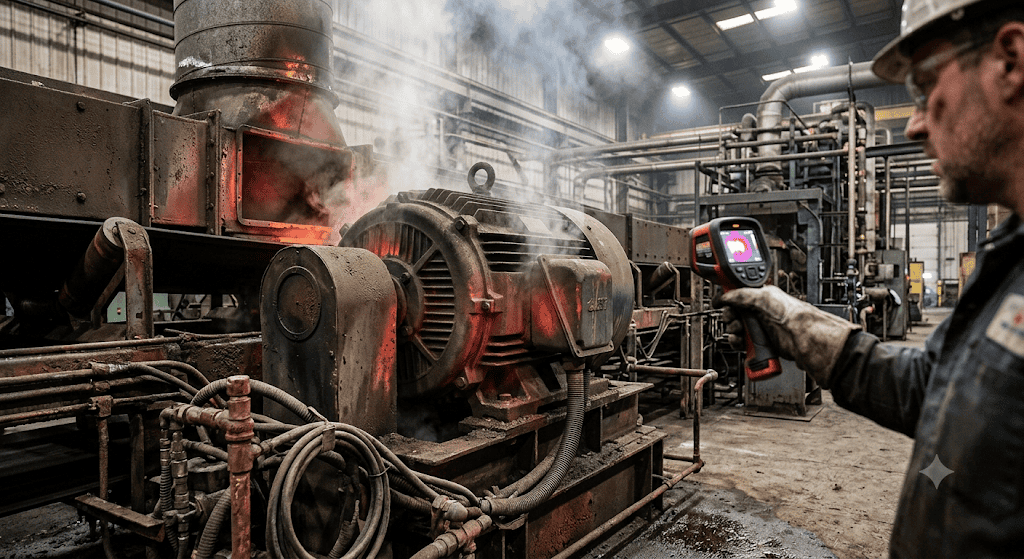
1. Excessive Heat & Unusual Temperature Rise
What it looks like:
The motor frame is noticeable hotter than normal to the touch, or your temperature sensors (RTDs/thermocouples) show readings creeping above the motor’s rated temperature class over time, not just during a one-off overload.
What causes it:
a. Overloading beyond nameplate rating
b. Blocked or dirty cooling fins/vents restricting airflow
c. Voltage unbalance across phases, which causes uneven current draw and localised heating.
d. Bearing failure creating friction and heat that transfers to stator
Why it matters:
Insulation life is directly tied to temperature: as a rule of thumb, every 10 degrees celcius rise above the insulation’s rated temperature can cut winding life roughly in half. Sustained overheating is one of the fastest routes to a burnt-out motor.
Immediate action:
Check load current against the nameplate rating, verify all three phases are balanced, inspect and clear cooling paths, and log temperature trends rather than relying on a single spot reading.
2. Burning Smell or Visible Discolouration
What it looks like:
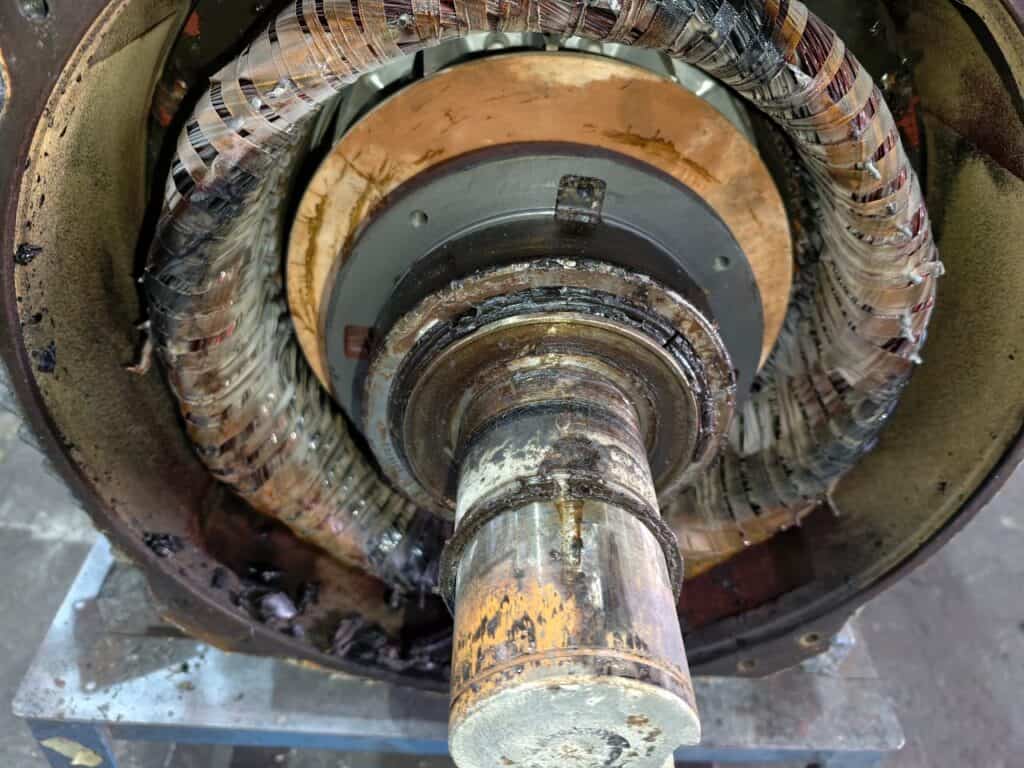
A sharp, varnish-like or “hot electrical” smell near the motor, or windings, terminals, and insulation that appear browned, charred, or discoloured when the motor is opened for inspection.
What causes it:
Insulation varnish breaking down under sustained overheating or localised hotspots.
Why it matters:
By the time you can smell burning insulation, thermal damage has usually already occurred. This is rarely an early warning but a sign the motor is close to catastrophic failure and should be treated urgently.
Immediate actions:
Shut the motor down and isolate it. Do not attempt to restart and run through the smell. Inspect terminal box connections for looseness or arcing marks, and arrange for the windings to be assessed.
3. Low or Declining Insulation Resistance (IR) Readings
What it looks like:
Megger (IR) test readings that are below the recommended minimum for the motor’s voltage class or readings that are trending downward across successive tests even if they haven’t failed a hard threshold yet.
What causes it:
a. Moisture ingress into the windings, especially for countries in Malaysia where the environment is humid
b. Insulation ageing from prolonged thermal or electrical stress.
c. Contamination from oil, dust, or chemical exposure in the operating environment.
d. Physical damage to insulation from vibration-induced chafing.
Why it matters:
IR testing is one of the few ways to catch winding deterioration before it becomes an audible, visible, or thermal problem. A single reading tells you where the motor stands today and a trend tells you how fast it is heading toward failure.
Immediate action:
Establish a baseline IR reading for each critical motor and retest on a regular schedule. If readings drop below the recommended minimum for the voltage class, or show a consistent downward trend, dry out and inspect the motor before further operation, and carry our a polarization index (PI) test for additional insight.
4. Increased Vibration & Unusual Noise
What it looks like:
Audible changes such as humming, buzzing, grinding, or rattling that were not present before, or a measurable increase in vibration amplitude picked up during vibration monitoring.
What causes it:
a. Bearing wear or failure
b. Rotor bar defects or broken bars
c. Mechanical looseness in the mounting, coupling, or foundation
d. Electromagnetic imbalance from winding
Why it matters:
Vibration is rarely just mechanical as faults left unaddressed transfer stress into the windings and accelerate insulation fatigue, while electrically driven vibration can itself be an early signature of a developing winding fault.
Immediate action:
Take a vibration reading and compare it against the motor’s baseline. If available, run an MCSA scan to distinguish between mechanical (bearing, misalignment, looseness) and electrical (broken rotor bar, winding assymetry) root causes.
5. Increased Power Consumption with Reduced Output
What it looks like:
The motor is drawing more current than it used to for the same load, running hotter for the same output, or visibly struggling during ramp-up despite no change in the driven equipment.
What causes it:
a. Partial short circuits between turns, reducing effective winding performance while increasing current draw.
b. Bearing drag or misalignment increasing the mechanical load.
c. Voltage unbalance or single-phasing conditions forcing the motor to work harder on the remaining phases.
Why it matters:
A motor that’s quietly becoming less efficient is often further along in winding degradation than it appears. Efficiency loss doesn’t always come with dramatic symptoms but it shows up first in the utility bill and current readings.
Immediate action:
Compare current draw and efficiency against commissioning data or the motor’s nameplate values.
Quick Reference Motor Checklist
| Warning Sign | What to Check | Method | Action Threshold |
| Excessive heat | Frame/winding temperature vs. rated class | Infrared thermometer | Sustained readings above insulation class rating |
| Burning smell | Visual inspection of windings and terminals | Visual inspection, terminal box check | Any burning smell |
| Low or declining IR readings | Insulation resistance vs. baseline and voltage-class minimum | Megger (IR tester), PI test | Below recommended minimum, or a clear downward trend |
| Increased vibration or noise | Vibration amplitude vs. baseline | Vibration analyser, MCSA | Noticeable increase from baseline |
| Increased power draw | Current draw vs. commissioning data | Clamp meter, power analyser | Unexplained rise in current for same load |
Regular condition monitoring, IR testing, vibration analysis, and MCSA, catches most of these issues weeks or months before they become emergencies. If you’re unsure where your critical motors stand, a baseline health check is a good place to start.